




Improving Mono-Material Packaging with Nitrocellulose-Free Inks
Sustainable ink innovations enhance circularity, improve recycling and meet evolving packaging standards
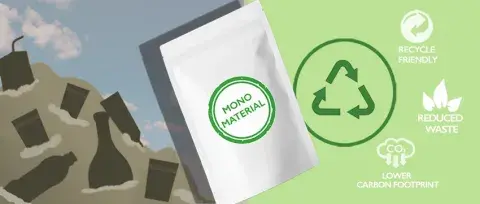
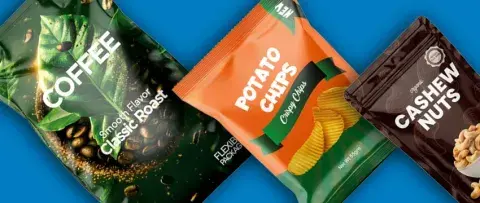
Brands and converters increasingly choose mono-material flexible packaging made from a single type of polymer to simplify recycling and support sustainability goals. While nitrocellulose-based inks offer reliable performance and have traditionally been used in flexible packaging, evolving recyclability targets and regulatory trends are prompting brands to explore alternative ink technologies. In this article, learn how nitrocellulose-free inks such as Innova Plus NCF help brands meet sustainability commitments, enhance the quality of recycled resin, and align packaging practices with circular economy principles. Innova Plus NCF makes this possible without sacrificing print performance.
Why Mono-Material Flexible Packaging Improves Recyclability
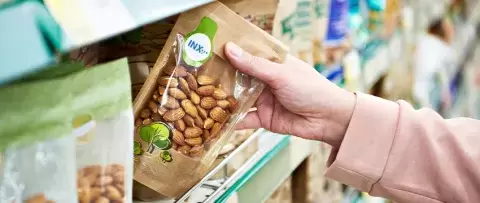
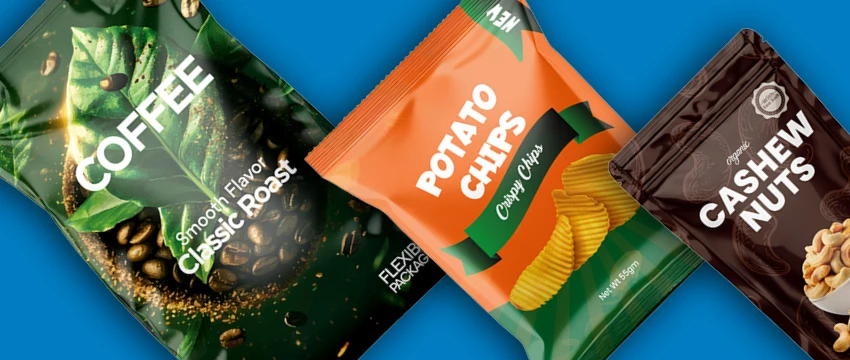
As sustainability becomes a top priority in packaging design, brands and manufacturers are shifting toward mono-material packaging. Flexible packaging made from a single type of polymer instead of multiple materials can be more easily recycled.
Traditional flexible packaging often combines materials such as polypropylene, polyethylene, aluminum, and PET to achieve specific barrier properties. While effective for product protection, these multilayer structures create challenges in recycling because the layers cannot be easily separated, leading to contamination and lower-quality recyclate.
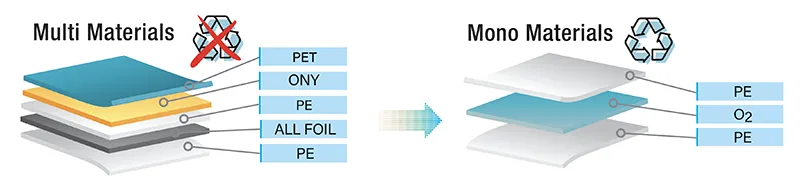
In a typical example, a multi-material laminate composed of PET/PE can be replaced with a barrier-coated OPP/CPP or OPE/PE structure. This new structure makes recycling easier by using similar materials while still maintaining the oxygen barrier properties of other multi-material structures.
By contrast, mono-material packaging that is typically based on polyolefin films eliminates these challenges. This type of mono-material packaging is widely accepted in recycling systems, making it easier to recover high-quality post-consumer resin. To achieve recyclability, every component of the package, including the inks and coatings, must be formulated to prevent contamination and support circular economy goals.
INX offers a full range of flexible packaging solutions that support both performance and recyclability in evolving packaging designs.
How Ink Impacts Recyclability in Flexible Packaging
While packaging sustainability efforts have traditionally focused on substrates and adhesives, inks can also play a role in recyclability. Inks must adhere well to substrates and maintain print quality. They must also withstand heat, moisture, and chemical exposure, all while being formulated to prevent contamination in the recycling process.
Nitrocellulose is commonly used in solvent-based inks for flexographic and gravure printing due to its high pigment-carrying capacity, heat resistance, compatibility, and print quality advantages. When evaluating the recyclability of flexible packaging, brands and converters should consider several key factors related to nitrocellulose-based inks:
- Regulatory Considerations: Emerging regulations in certain regions classify packaging printed with nitrocellulose-based inks as less recyclable, potentially impacting compliance and adding costs under Extended Producer Responsibility (EPR) & PPWR programs.
- Thermal Stability During Recycling: Nitrocellulose inks have limited thermal stability, which may lead to safety and quality considerations during high-temperature mechanical recycling processes.
- Compatibility in Mechanical Recycling: Effective polymer recycling often depends on washing and extrusion processes. Nitrocellulose-based inks can influence polymer melt properties and potentially affect the quality of recycled materials.
- Food Safety Standards: Nitrocellulose inks are subject to scrutiny in direct and indirect food packaging applications. Evolving regulatory standards and sustainability expectations may influence their continued acceptance in certain markets.
INX offers a full range of flexible packaging solutions that support both performance and recyclability in evolving packaging designs.
How Nitrocellulose-Free Inks Support Circular Packaging Goals
A circular economy prioritizes materials that can be recovered, reused, and reintroduced into new packaging. By transitioning to Innova Plus NCF, a nitrocellulose-free ink system, brands and converters can proactively support circularity by:
- Meeting brand sustainability objectives and regulatory requirements
- Ensuring compatibility with mono-material flexible packaging structures
- Improving the quality of post-consumer recycled materials
- Maintaining exceptional print performance during the transition to recyclable packaging
Innova Plus NCF was specifically developed to eliminate nitrocellulose without sacrificing adhesion, color strength, printability, or lamination performance. Removing nitrocellulose from inks can help prevent potential discoloration, degradation, or chemical interactions, thereby preserving the quality of recycled plastic.
As Extended Producer Responsibility (EPR) regulations continue to evolve, brands are increasingly expected to adopt materials aligned with recyclability goals. With Innova Plus NCF, the packaging industry can confidently advance toward more sustainable and recyclable flexible packaging solutions.
Mono-material packaging is gaining traction across the industry, particularly among brands and converters working to meet sustainability goals. This article highlights how brands are leading the way in mono-material packaging.
LINK
Innova Plus NCF
Nitrocellulose-Free Inks for Recyclable Flexible Packaging
Transitioning to Nitrocellulose-Free Inks in Flexible Packaging
Shifting to nitrocellulose-free ink technology requires understanding of printing and converting performance, and regulatory considerations for packaging applications. Innova Plus NCF represents the next step in sustainable packaging inks created to help meet both performance and recyclability goals. The team at INX works closely with printers, converters, and brand owners to facilitate this transition without compromising production efficiency. If you're looking to enhance the recyclability of your flexible packaging, let’s start the conversation.

For more insight into how inks and coatings contribute to circular packaging strategies, explore this INX blog on safe, sustainable ink technologies.
Share




![Shrink Labels and Recycling [Shrink labellled bottles]](/sites/default/files/styles/large/public/2024-04/INX_shrink_blog850x360.jpg?itok=Qsx6qEqs)